
CPA and Bookkeeping Plano Alternative.A month you can trust, then the return.
The books closed to the bank, payday set up on a provider you run, and the return prepared from those months. Steven Palmieri carries the Tax CFO title for the months on this door. Plano's sales tax has three pieces, and we name each one before the month is finished, so a wrong code never follows you into May.
Show the form
What should we look at first?

You will be talking to the Steven Palmieri practice.

A code from next door
A receipt coded for Frisco on a sale made in Plano is a small mistake that repeats every month. We catch it on the first one. The second-Thursday art walk fills downtown, and Friday's bank posting still belongs to Thursday's sale.
Click to see the code ›Tap to see the code ›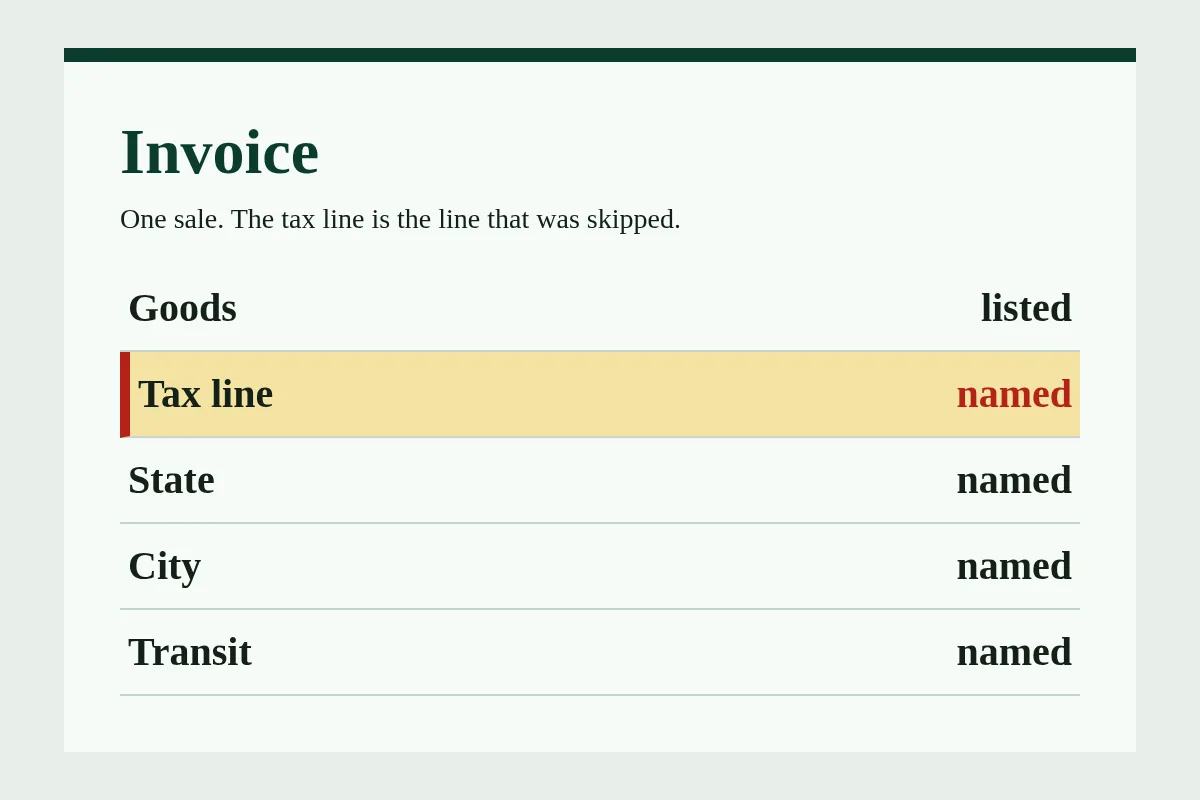
The piece the invoice skipped
An invoice that leaves transit off still owes it. We put the three pieces on every sale.
Click to see the invoice ›Tap to see the invoice ›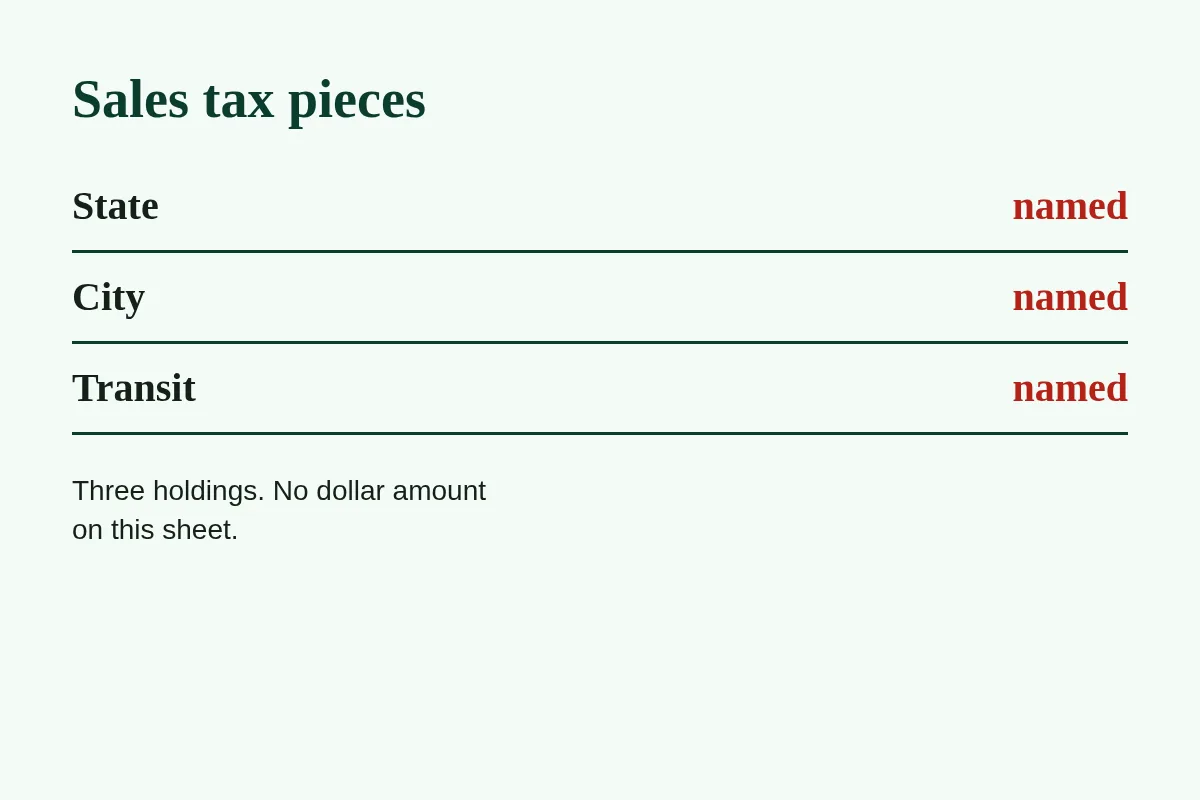
Three pieces, named
State, city, and transit are three holdings. Each one gets a name before the month is finished. We enjoy that the east side kept the old tree at Bob Woodruff Park, and an old asset still needs a life on the books.
Click to see the pieces ›Tap to see the pieces ›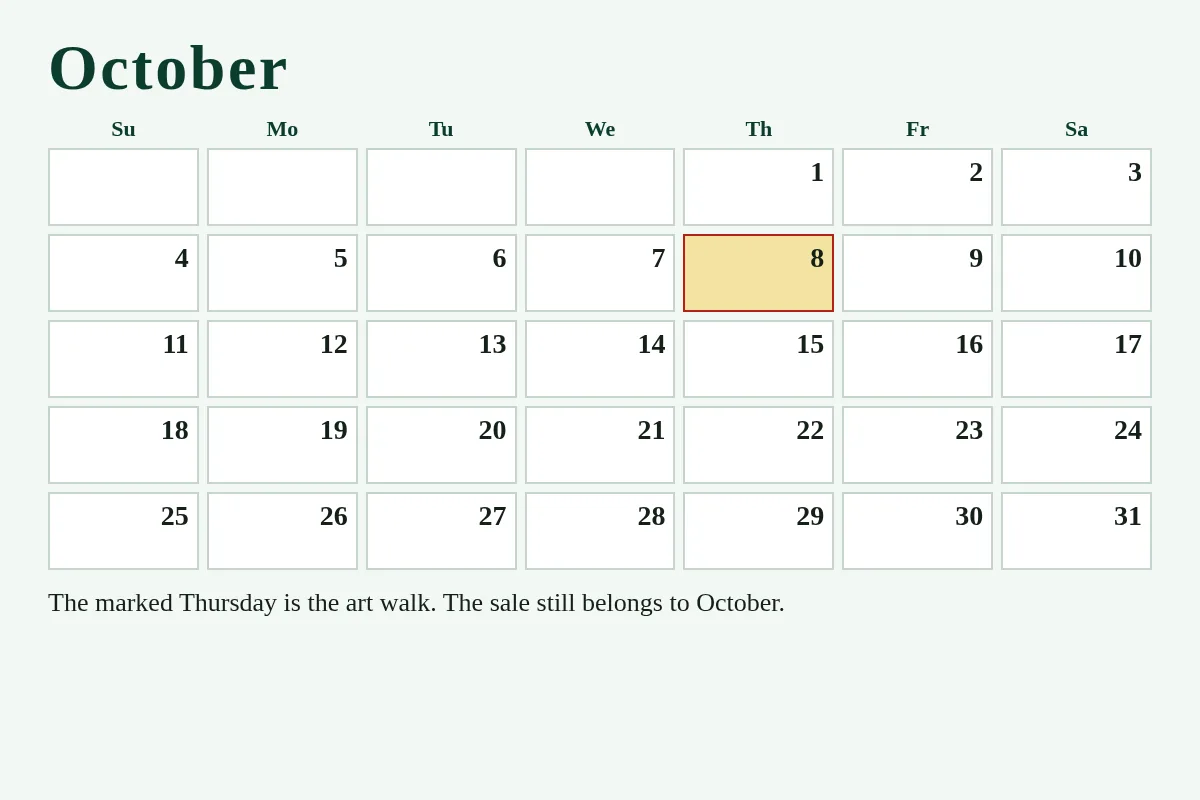
October still chooses
October is when your pay, a purchase and the company's shape can still change the year, if the months before it are closed. We share the memory of Collin Creek, opened in July 1981 on the west side, and an October sale there still lands in October.
Click to see October ›Tap to see October ›
Who does the work
Steven Palmieri, a Tax CFO, closes the months with us and drafts the return from those months.
Click to see who ›Tap to see who ›
A short conversation
Bring one receipt that will not tie. We will say if the code caused it.
Click to pick a time ›Tap to pick a time ›
Six troubles on a first look.
Open one card.
1A receipt borrowed a neighbor code
We read the code against the city table before the month is called finished.
A code taken from a city outside the transit system leaves the transit piece inside sales, so the deposit looks larger than the sale you made.
2The invoice never names transit
We split the ticket into the sale and the money you are holding.
One tax field on an invoice can post only the city piece. The transit piece then never reaches a liability, and the next report is short.
3May is using a proud revenue number
We rebuild the revenue number from months the bank already agrees with.
Tax that sat inside sales all year walks into the franchise report. Even a computation of zero still has to be sent.
4October will repeat a bad quarter
We want the quarter tied to deposits before the report date.
Quarterly filers meet a date on the 20th of October. A code fixed after that report has already taught the year the wrong split.
5The notice came from the other county
We match the notice to the parcel before anyone talks about a protest.
The city crosses a county line. A notice from one appraisal district does not cover a parcel that sits in the other.
6Payday has no provider yet
We set the provider, the people, and the dates, and you run payday after that.
Setup ends on a morning when the account exists and the roster is on it. We do not take payday back during a busy season.
Tax CFO
The office for that work sits in Dallas. This city is not a second lobby.
We see the 1908 Interurban station on 15th Street and wonder what depreciated life those walls still carry.
Which month will not tie
Tell us which month will not tie.
Tell us the newest month you already trust against the statement.
You will be talking to the Steven Palmieri practice.
What we mean by a finished month
A month is finished when every deposit on the statement has a twin in the books, and when the part of each deposit that was never your sale has been moved out of income. Cash, bills you owe, and the batch that has not landed yet have to be one story. Leaving the hard deposit for the next close leaves this month unfinished.
The close happens in the software you already pay for, on a login that stays in your name. We use only the access you turn on for the months in scope. If March will not agree, October does not get to pretend March was fine. A repair that is bigger than a monthly rhythm is named, with a price, before anyone talks about a standing engagement.
The practical test is boring, and that is the point. Pick the largest deposit of the month. Find the batch report that claims to explain it. If the report's sales plus the tax you collected plus any tips or fees you were holding do not add to that deposit, the month is still open. We would rather leave it open than publish a profit that the bank cannot support.
Payday is set up, then you run it
Setup is finished on the morning the provider account exists, the people who should be paid are on the roster, and the filing dates are visible to you. After setup, payday is a submission inside that provider account, and we do not keep a password that could send it. A busy season does not hand the clicks back to us, and it does not justify a second provider beside the first.
What you pay yourself is a conversation for the fall, built from the year to date figures rather than from a wish. February can be thin and September can be packed, and the draw does not have to pretend they were twins. A closed December leaves the return nothing to do but repeat draws that already left the account. Wage reports from the provider are tied to the books before a draft starts, so the spring is not the moment you discover them.
The return follows the closed months
The return still has to cover the whole year, including months someone else closed. A month the statement already supports can stay as it is. Any month the bank will not support gets reopened, whether we closed it or someone else did. We do not put a signature on the table while December is still open.
The draft comes to you for a reading before any filing. The draft carries the preparer number federal rules require, which is a fact about who prepared it and not a credential claim. If the sales tax code was wrong for part of the year, revenue on that draft is rebuilt from the reclass. It is not copied from the proud total the software showed in June.
Why the receipt has three holdings
Inside the city limits the state takes 6.25 percent, the city takes 1 percent, and the transit agency takes another 1 percent. That is how a register reaches 8.25 percent. No extra county percent sits on top of that 8.25 inside Collin County. Neighbors such as Frisco, McKinney, and Allen are not in the transit system, so a file copied from one of them looks tidy and is short one piece.
We read that transit piece as money you are holding for someone else. It is not a sale. Code the entire deposit as income and profit looks proud while the sales tax account sits empty. The close puts the pieces back where they belong before anyone talks about profit.